
All you need to know about TAQA Qualifications

What is TAQA?
TAQA stands for Training – Assessment – Quality Assurance.
TAQA is a suite of qualifications comprising education and training, assessor and internal verifier awards and certificates. This should not be confused with CAVA, which stands for Certificate in Assessing Vocational Achievement. The former is a broad range of qualifications, whereas the latter is the full certificate replacing the older A1 assessor award typically used for NVQ and apprenticeship assessments.
HRD services provide the full range of TAQA qualifications, including the level 4 certificate in education and training and the level 5 diploma in education and training. We also offer the level 3 award for assessing occupational competence, the level 3 award for assessing vocational skills, knowledge, and understanding; and the full level 3 certificate for assessing vocational achievement. Lastly, the quality assurance element of TAQA is covered by the level 4 understanding the principles and practices of internally quality assuring the assessment process and the level 4 award in the internal quality assurance of assessment processes and practices.
We conduct education and training courses on-site at your location in Ballymena, Antrim, Belfast, Londonderry, and throughout Northern Ireland. We also facilitate fully supported tutor delivery online using the Microsoft Teams education version and Google Meet.
Educational Posts 2026
Table of Contents

Simple, Effective Ways to Use Technology in Adult Online Learning
1. Know the digital landscape and map it
Before you dive into interactive activities, have a good foundation. Many adult learners are balancing their studies with employment and family commitments. If students have to spend twenty minutes looking for a link to a lecture or a submission box, they get dissatisfied quickly.
Give your learning platform a clean, clear and logical structure. Shorten navigation so that key resources are only a few clicks away.
Use standard file types such as document files, PDF and standard MP4 format for short video clips.
Provide a single, dependable place to schedule and download rather than links to join distributed throughout multiple emails.
2. Create or share short, catchy videos
It’s rare that adults have the attention span for long, pre-recorded lectures after a day’s work. Use the core concepts and make them digestible in bite-sized video chunks, often called 'micro-learning'.
Videos should be 3-7 minutes in length and focus on one topic, model or practice.
Demonstrate a process to users, display software, or graphically deconstruct a case study using screen recordings.
Make it mobile-friendly – learners need to see videos on a phone or tablet so they can watch them at lunch or during a commute.
3. Utilise Simple Tools
"You are at an online meeting, someone is talking for two hours, and you are getting digitally weary. Lightweight live interaction tools keep the whole group engaged without breaking the flow of conversation.
Use simple shared canvas technologies that allow learners to post virtual sticky notes. It is particularly effective for rapid brainstorming, bringing in examples from the industry or mapping out solutions in small groups.
Ask short multiple-choice questions to immediately take the group’s attention and feelings to the shared nature of a topic.
Ask a topic and have students provide one-word reactions or brief insights to the chat box, then open the floor for spoken discussion.
4. Design collaboration spaces
Adults learn best from adults. Technology enables you to work together with purpose, without the logistical stress of face-to-face meetings.
If you place learners into tiny virtual breakout groups, give them a specific document or common template to work on for a certain duration.
Work together on the same case study with online document editing. Everyone sees edits as they are made, so group problem resolution is apparent and smooth.
5. Support async discussion and reflection
Professional growth usually involves time to contemplate and absorb new material. Asynchronous tools allow for reflection and for learners to contribute when it is convenient for them.
Structured discussion groups. Stay clear from generic forum topics. Scenario-based questions. Have learners consider how a subject applies to their work environment.
Provide a way for people who prefer to talk rather than type long entries to leave voice or short video comments.
Finally, technology in adult online learning is about clarity, connection and ease, not about being flashy.
Choosing some simple and sound tools that enable active engagement and practical reflection will create an environment in which adult professionals can thrive, share their experience and make the most of their professional development trajectory.
Taster Video Series (What to expect in Delivery)
Educational Posts 2025

Why you should rip up those ‘Train the Trainer’ Certificates.
If you’ve ever taken or are thinking about taking a train the trainer course here in Northern Ireland or elsewhere, you should ask the provider what it is really worth. Train the trainer is a term, it is a reference to adult continuing education, where people in organisations require some form of accreditation for their training. ILM and a few other Award Bodies do endorse or approve train the trainer courses, however, they remain unaccredited.
Endorsement vs. Accreditation: The Core Difference
At first glance, an endorsed course looks professional. Usually, a private training provider creates their own curriculum and pays a body like the CPD (Continuing Professional Development) service or an awarding organisation to put a stamp of approval on it.
Accreditation, however, means the course is part of the Regulated Qualifications Framework (RQF). These are the Level 3 and 4 Awards in Education and Training (AET/CET). They are monitored by Ofqual, ensuring the certificate carries the same weight regardless of where it was earned.
| Feature | Endorsed “Train the Trainer“ | Accredited (Level 3/4 AET/CET) |
| Regulation | Self-regulated by the provider | Externally regulated by Ofqual |
| Portability | May not be recognised by other employers | Nationally recognised across all sectors |
| Depth | Focuses on specific delivery skills | Covers pedagogy, assessment, and law |
| Duration | Typically 1–3 days | Usually 48–180+ hours of study |
The Strengths and Limitations of Train the Trainer Certificates
Short, endorsed courses are popular for a reason.
-
The Pluses: They are excellent for subject matter experts who just need a few stage skills to deliver a specific internal workshop. They are cost-effective, take very little time, and offer immediate practical tips on public speaking and icebreakers.
-
The Negatives: The lack of rigour is the main hurdle. These certificates rarely dive into how people learn or how to handle complex classroom dynamics. Because they aren’t regulated, an employer has no guarantee of the standard of the assessment. They often lack portability—meaning another company might not accept the certificate as valid proof of competence.
Stepping Up: The Level 3 Award & Level 4 Certificate
For those serious about a career in education or high-stakes corporate training, the Level 3 Award in Education and Training (AET) and the Level 4 Certificate (CET) are the gold standards.
Level 3 AET: The Foundation
This is the entry-level qualification for anyone wanting to teach in the post-16 sector.
-
Strengths: It covers the Cycle of Learning, inclusive practice, and the legalities of teaching (such as health and safety and equality). It requires a micro-teach session where skills are assessed against national standards.
-
Limitations: It is an introductory qualification. While it provides a solid base, it doesn’t offer the deep dive into educational theory that senior roles might require.
Level 4 CET: The Practitioner
The Level 4 is a significant step up, requiring a minimum of 30 hours of actual teaching practice.
-
Strengths: This qualification bridges the gap between being a speaker and being an educator. It explores various teaching models, explores the use of resources in depth, and demands a higher level of reflective practice.
-
Limitations: It requires a substantial time commitment. It isn’t a quick fix and involves significant coursework and observation.
Why Accreditation Adds More Value
If the goal is to build a reputation as a specialist, accreditation is the safer bet.
-
Professional Integrity: An accredited qualification proves the trainer has met a national standard of excellence, not just attended a two-day seminar.
-
Future-Proofing: Many government contracts and large-scale corporate tenders now explicitly require trainers to hold at least a Level 3 AET.
-
Better Results: Understanding the psychology of learning—rather than just following a how-to guide—leads to better learner retention and a higher return on investment for the organisation.
Final Thoughts
Endorsed Train the Trainer courses are a great starting point for informal, internal knowledge sharing. However, for those looking to build a career or ensure their training department stands up to external scrutiny, the Level 3 and 4 regulated qualifications provide a depth of knowledge that a weekend workshop simply cannot match.
Investing in accreditation isn’t just about the certificate; it’s about mastering the craft of teaching.
Are you ready to advance your career in training, assessment, or internal verification?
Learn more at www.hrdservices.co.uk
Educational Posts 2025

Eligibility Criteria for TAQA Qualifications: What You Need to Know
If you’re considering a career in training, assessment, or internal quality assurance, understanding the eligibility requirements for industry-recognised qualifications is essential. Here’s a breakdown of what you need for the most popular TAQA qualifications.
Level 3 Award in Education and Training (AET)
This entry-level qualification helps you begin your journey as a trainer or educator.
-
Requirements:
-
Solid literacy, numeracy, and IT skills
-
No need for access to your own learners
-
-
Practical Component:
-
Microteaches are typically done among peers
-
Alternatively, you may observe a trainer working with their learners to meet the practical requirement
-
Level 4 Certificate in Education and Training (CET)
Stepping up to the Level 4 CET means greater responsibility and practical teaching experience.
-
Requirements:
-
Level 2 (GCSE equivalent) in literacy, numeracy, and IT
-
Access to your own group of learners
-
Opportunity to deliver at least 30 hours of teaching practice
-
-
Observation:
-
You’ll be observed teaching on three separate occasions, with each session lasting one hour
Level 3 Certificate in Assessing Vocational Achievement (CAVA)
If you want to become an assessor in vocational settings, CAVA is the qualification for you.
-
Requirements:
-
Good levels of core skills (literacy, numeracy, IT)
-
Access to at least two learners on a programme where both knowledge- and competency-based assessment can be applied
-
-
Assessment Methods:
-
Observations, questioning, discussion, examination of work products, assignments, and exams
-
-
Observation:
-
You’ll be observed once in the workplace and once in a training environment (which could be validated by a peer or witness)
Level 4 Internal Quality Assurance (IQA) Award and Certificate
Aspiring Internal Verifiers or Quality Assurers need this qualification to progress.
-
Requirements:
-
Currently working as a trainee Internal Verifier
-
Access to two assessors, each with at least two of their own learners
-
Good standard of English, maths, and IT
-
-
Observation:
-
You must be observed with both assessors at least once
-
Observation could include leading a standardisation meeting
Are you ready to advance your career in training, assessment, or internal verification?
Learn more at www.hrdservices.co.uk

 Teaching Adults in Continuing Education:
What It Really Takes –
An AI and Human Take on Adult Continuing Education and Teaching –
In a world where lifelong learning is no longer optional but essential, adult education has become a cornerstone of personal and professional growth. But teaching adults isn’t just about delivering content—it’s about understanding who they are, what drives them, and how they learn best.
Whether you’re a seasoned educator or just stepping into the world of continuing education, here’s what it truly takes to teach adults effectively.
1.  Understand the Adult Learner
Adult learners are not just older versions of school students. They bring a wealth of life experience, responsibilities, and motivations that shape how they engage with learning.
Key Characteristics:
- Self-directed: Adults prefer to take ownership of their learning. That said, we must encourage people to take an equal share of the accountability for progress and achievement. HRD Services (trading name of Martin McAfee) delivers training in person and online; however, there is an expectation that course participants take responsibility for auditing their own pace and know exactly where they are at on a course. This is one of the challenges most educators face when working with learners.
- Goal-oriented: They often have specific outcomes in mind—career advancement, skill development, or personal enrichment.
- Relevance-focused: They want to know how the learning applies to real life. Having worked internationally as a trainer for the world’s largest awarding body, the principal tutor has vast experiences and stories to share that bring learning to life at the same time as offering transparency for what trainers and teachers are getting themselves into.
- Time-conscious: juggling work, family, and studies means every minute counts.
Tip: Start by asking learners about their goals and expectations. Tailor your content to meet those needs. This is what HRD Services tries to do with every learner enrolled in the award and certificate/diploma programmes in education and training.
2.  Design with Flexibility in Mind
Rigid, one-size-fits-all approaches rarely work in adult education. Flexibility is key. This is a feature of inclusive teaching, as covered in the level 3 award in education and training in Northern Ireland.
Strategies:
- Modular content: Break lessons into digestible chunks, for example, by learning outcome. We plan and structure teaching and learning that focuses on individual outcomes.
- Asynchronous options: Allow learners to study on their own schedule.
- Multiple formats: Combine video, reading, discussion, and hands-on activities.
Tip: Use real-world scenarios and case studies to make learning more relatable and engaging.
3.  Foster a Collaborative Environment
Adults thrive in environments where they can share experiences and learn from each other.
How to Encourage Collaboration:
- Facilitate discussions, not just lectures. Martin involves people at every turn. By rotation, the training allows for idea sharing and discussion to break down topics.
- Use peer feedback to deepen understanding. We do this for the microteaching aspect of AET Level 3.
- Create group projects that mirror workplace dynamics.
Tip: Treat learners as partners in the learning process, not passive recipients.
4.  Communicate with Empathy and Clarity
Adult learners often face anxiety about returning to education—especially if it’s been a while.
Best Practices:
- Be approachable: Create a safe space for questions and mistakes.
- Give clear instructions: Avoid jargon and be concise.
- Offer regular feedback: Make it constructive and encouraging.
Tip: A little empathy goes a long way. Acknowledge their challenges and celebrate their progress.
5.  Measure What Matters
Assessment in adult education should go beyond tests and quizzes.
Consider:
- Practical application: Can they use what they’ve learnt?
- Self-assessment: Encourage reflection on growth. A self-assessment is required for the OCN NI NOCN Level 3 Award in Education and Training delivered here in Northern Ireland.
- Feedback loops: Use learner input to improve your teaching.
Tip: Focus on progress, not perfection. Adults appreciate seeing how far they’ve come.
Final Thoughts: Teaching Adults Is a Privilege
Teaching adults is not just about transferring knowledge—it’s about transformation. You’re helping people change careers, gain confidence, and unlock new opportunities. That’s powerful stuff, as we would say here in Northern Ireland!
So whether you’re teaching in a classroom, online, or in a hybrid format, remember: adult learners bring depth, diversity, and determination. Meet them with respect, flexibility, and a genuine desire to help them succeed—and you’ll make a lasting impact.
As a parting bit of advice, it is not just the tutor’s responsibility to get you a qualification. As adults, we should be taking stock of our own behaviours, including those that hold us back. Always be clear with people that teaching and learning is a two-way street.

 Exciting News for Aspiring Educators!
Are you passionate about teaching and ready to take your skills to the next level?  Our Level 3 Education and Training Award Qualification is here to help you shine! Whether you’re looking to enhance your career or make a significant impact in your community, this entry-level Adult Teaching Course is designed for YOU.
  Why Choose the Level 3 Award from HRD Services Human Resource Development?
– Gain essential skills and knowledge in teaching and training
– Study at your own pace, fitting your learning around your busy life
– Open doors to exciting career opportunities in education
Join us and be part of a legacy of learners who are already dedicated to making a difference in their sector! Ready to embark on this journey?

Online self-paced learning or tutor-supported delivery. Your best fit?
Online learning is very flexible and easy to get to, but with so many choices, how do you pick the one that’s best for you? Self-paced learning and tutor-supported delivery are two well-known models that stand out. Both have their strengths, and knowing what they are can help you learn as much as you can.
The Freedom of Learning at Your Own Pace –
Good things:
Personalised Pace: Go through topics you already know quickly and spend more time on those that are hard for you. This tailored approach makes sure you really learn the material without feeling rushed or held back by a group.
Global Accessibility: Break down geographical barriers and get to world-class content and experts from anywhere with an internet connection.
Delayed Feedback: If you have a burning question, you might have to wait for an answer, which can make it harder to learn a certain idea.
Pros:
Accountability and Motivation: Having someone to support you and check on your progress can be a big motivator that keeps you focused on your learning goals.
Potentially Higher Cost: Personalised attention and live interaction usually cost more than options that are only self-paced.
Very disciplined and self-motivated.
Looking for a cheaper option.
Like to learn in a group setting.
In the end, both self-paced and tutor-supported online learning are great ways to grow and improve your skills. You can choose the model that will help you succeed in your education by honestly thinking about what you like and need.
Thank you for reading, and I hope you enjoyed this article on the main considerations between self-paced no tutor intervention or tutor supported delivery courses and the level 3 award in education and training, something you can learn about in our Education and Training and Assessor and Quality Assurance courses delivered online and f2f in Northern Ireland. Martin McAfe

Train the Trainer Courses vs the Level 3 Award in Education and Training. What’s best for you?
The need to efficiently transmit knowledge and skills is paramount in the fast-paced fields of corporate training and adult education.
Two often-used routes are open for those wishing to enter a teaching or training capacity: traditional “Train the Trainer” courses and the more formally acknowledged “Level 3 Award in Education and Training” (AET). Although both provide you with the tools to teach and train others, their scope, acknowledgement, and degree of pedagogical approach differ greatly.
Then, how should you decide which one best fits your professional growth? Let us divide the main differences.
Conventional Train the Trainer Courses: Applied Practical Skills for Right Now –
Often in-house for a business or company, traditional Train the Trainer courses are shorter, more concentrated programmes meant to equip participants with the basic skills needed to deliver successful training sessions within a given environment.
Essential traits:
Emphasising quick application of training delivery techniques, the focus is highly practical. The duration of the training is usually short, ranging from one day to several days.
Fundamental topics such as presentation techniques, learning styles, session planning, feedback methods, and managing demanding attendees are frequently covered.
Typically, these courses are tailored to specific internal or sectoral needs. Although they help to improve skills, they often result in no nationally accepted qualification. Usually including practical demonstrations and occasionally a brief written component or training plan, assessment is
Perfect for people looking for a quick skill boost, those needing to teach colleagues or clients in particular areas, or companies wanting to upskill their internal subject matter experts to provide training.
Benefits include fast completion, great practicality, and usually customising to particular organisational requirements.
Cons: limited external recognition; maybe lacking in-depth pedagogical theory; scope may be limited.
The Foundation in Pedagogy of the Accredited Level 3 Award in Education and Training (AET)
The Level 3 Award in Education and Training, originally known as PTLLS – Preparing to Teach in the Lifelong Learning Sector, is a nationally recognised qualification in the UK. It offers a basic knowledge of the ideas of education and training and acts as an introduction to teaching qualifications.
Important Characteristics:
Focus: a more thorough introduction of theories, ideas, and approaches of teaching and learning.
Usually offered either in a blended learning environment, online, or in-person, duration is longer than standard courses—usually several weeks or months.
Topics covered include the roles, responsibilities and relationships in education and training; knowledge of inclusive teaching and learning strategies; support of learning and development; and evaluation in education and training.
Recognition is provided nationally in England by Ofqual, the Office of Qualifications and Examinations Regulation. For individuals seeking official teaching or training positions across various fields, this credential is considered valuable. Also officially recognised as an accredited train-the-trainer course in Northern Ireland.
Assessments include reflective practice, micro-teaching courses—where you brief colleagues on a brief training session—and assignments. This course is ideal for individuals seeking to progress to higher-level teaching qualifications like the Level 4 Certificate in Education and Training or Level 5 Diploma in Education and Training, those seeking a formal qualification to enhance their career opportunities, and those aspiring to become teachers or trainers in the field of further education and skills.
Benefits include a strong theoretical basis, nationally accepted qualification, access to official teaching positions, route to further degrees.
Cons: more in-depth academic rigours, longer commitment, maybe more expensive.
Deciding Which Is Right for You?
Your personal objectives and career aspirations will determine which of the traditional Train the Trainer courses or the AET best fits you:
If you have to rapidly acquire useful skills to train inside your company or provide particular materials, a standard Train the Trainer course could be enough and more effective.
The Level 3 Award in Education and Training (AET) is the more reliable option if you are seeking a formal, nationally recognised qualification with a strong basis in educational principles and can open doors to a greater spectrum of teaching and training prospects. Many publicly sponsored education and training environments require it before one can teach there.
Thank you for reading, and I hope you enjoyed this article on the main considerations between traditional train the trainer courses and the level 3 award in education and training, something you can learn about in our Education and Training and Assessor and Quality Assurance courses delivered online and f2f in Northern Ireland. Martin McAfee.

The Role of the Tutor
Tutoring has always been something different from teaching and training. Perhaps the best way to describe some of those differences would be to start with the mode of delivery being mainly online in the world of tutoring. Classic teaching and training practice is usually associated with the classroom delivery. Tutors tend to work with people remotely, certainly more so today than in the past using video conferencing software and various other tools for the subject in focus. This is not always the case though, as many tutors do indeed work in person with their students.
So, what is tutoring if not teaching and training? Another difference would be in the time spent in contact with learners, with the tutoring function spending significant hours working on a one for one basis, resulting in a greater degree of attention and learner centred development. Tailored input to suit the course participants needs would be one of the main focuses of the tutor. The Tutor will seek to tap into what individuals require specifically for their area of expertise. This, however, places a responsibility on the tutor to be experienced and up to date in the subject they are delivering.
This short article does not suggest teachers or trainers do not have extensive experience of their subjects but does suggest that teachers and trainers working in education may not have the time to spend in a one for one setting, taking away that personal journey time that comes with tutoring. To be a tutor, you should be prepared to put in the time to bring your learners to point B. This, however, places responsibility on students to take ownership of their own development.
What qualities do you need to be a tutor then? Patience is number one, followed closely by expertise in the subject area. Communication ranks high alongside organisational skills and good time management. Quick thinking, ability to improvise are essential skills supported by sound IT knowledge. Flexibility and a willingness to work irregular hours also top the list of skills and attributes required to be a tutor. Having your learners’ best interests at heart at all times does not require any explanation. If you are providing a service, then be prepared to not only educate, but also provide a memorable customer experience overall. It isn’t always plain sailing, and you will encounter challenges. Make sure you are supported with good colleagues, and you could just be the next big hit in the world of tutoring.
Do you think you have what it takes to provide a good service with a positive attitude towards supporting your learners? The Education and Training Courses we deliver in Northern Ireland provide examples for those interested in getting into tutoring. We also provide preparing for coaching and mentoring courses by request for individuals and groups.
Thank you for reading, and I hope you enjoyed this short article on tutoring online and in the classroom, something you can learn about in our Education and Training and Assessor and Quality Assurance courses delivered online and f2f in Northern Ireland. Martin McAfee.
Educational Posts 2024

The Mentoring Function
Mentoring is a support function in
education and training, however, can be a standalone function in its own right.
What is mentoring, not? Mentoring is not teaching or training. It is not counselling either. What is mentoring then? It is, a two way relationship, a transaction of sorts, serving to enhance the transfer of information for knowledge development. It is, a transaction between two professionals, the Prodege and the Mentor, otherwise known as the Mentee and Mentor. The experience should benefit both parties mutually.
When used effectively, mentoring creates time and space for professionals to exchange ideas, share good practice and validate ideas. Mentors wouldn’t typically tell you what to do, per se. They would rather steer you in a direction based on tried and tested methods. The trust that the mentee places in their Mentor is obviously a high stakes gamble. Essentially, mentees will take advice and guidance from their Mentor, rarely questioning if the advice and guidance is sound. This makes it critical for anyone considering mentoring as a career choice or support function to be principled, and, to go into the job with an ethical mindset. You can make or break a mentees spirit and enthusiasm in a subject with the advice you give.
You’ll need to be good on the admin front, you will also be organised, honest, passionate about your specialism, a good communicator on all fronts; writing, reading, speaking and listening, and, respectful of your clients privacy. Registration with the Information Commissioners Office (ICO) as a Data Handler will be at the top of your list, and something you’ll be responsible for auditing annually. Your cyber security protocols, next. Records management and data protection regulations will be one of your top priorities at all times. All the other stuff typically falls into place when the initial contract and agreements are in play. The planning should be flexible, with meetings, comfortable. Your intentions will always be in the positive interests of the client. You’ll have emotional intelligence skills, be empathetic, be understanding and critical within reason. You’ll apply yourself in a professional manner, acting with integrity at all times. You will be patient, and of course, flexible.
Do you think you could mentor someone? Are you the sort of person who likes to help people develop in their career, but not so keen on getting into training or learning and development?
HRD Services provide Level 4
Coaching and Mentoring short courses – Preparing for the Coaching and Mentoring
Roles. The single unit awards are assessed by coursework only. Tuition is
online, fully tutor supported. We will teach you how to apply the above in
practice, and much more about the important role mentoring plays in learning
and development.
Thank you for reading, and I hope you enjoyed this short article on Mentoring in education and training, something you can learn about in our Education and Training and Assessor and Quality Assurance courses delivered online and f2f in Northern Ireland. Martin McAfee.

Managing AI Use In Education and Training Courses
We have all heard of AI in 2024 after the speedy emergence of new technologies that seemingly make studying and achieving in education and training courses easy…or so people believe.
The issue with Bots trolling the internet for snippets of information, many from unreliable sources, is that your text could come from anywhere. And, of course, the responses are machine generated, not from the ‘person’ behind the screen. That would mean the Chat Bot should get the certificate at the end of the day, right? Not the person.
Misuse of AI, or over reliance on AI in education and training courses in Northern Ireland, throughout the UK, and globally, has become a major challenge for educators and trainers. In my own practice, I have observed a significant rise in the default position taken by learners, ‘what is the easiest way to get this qualification without studying’. This is worrying. What happened to taking a genuine interest in reading and sifting through content from research to inform the direction of coursework? Why do many people feel the only way is to cheat? Perhaps it is a reflection of today’s society, where we see Dishonesty Incompetence and or Greed (The DIG syndrome). People who clearly rely on AI for their assignments, as in copying and pasting the responses into their reports and essays and claiming them as their own, are obviously in the ‘Dishonest’ category. It is not benefitting anyone. It is certainly not developing someone’s ability to work independently or their literacy for that matter either!
AI misuse is a form of misconduct that could lead to people being removed from the course they registered on. Classic old plagiarism, copy and paste from website content has kind of faded away and since been replaced by copying and pasting from a machine response from a Chat Bot, which is clearly harder to detect. However, educators and trainers, Assessors and Internal Verifiers and External Verifiers are all checking for its presence. We typically use a few scanners to obtain a reasonably accurate percentage of how much of the work is machine written or human. There is no maximum percentage for accepting AI in education and training, leaving it risky for learners and students to rely on.
The most recent advice from the Joint Council for Qualifications (JCQ) has stated that referencing, acknowledging research using Chat Bots is acceptable, however, unacceptable for anyone to pass off, or claim machine written responses as their own. So, the conventional way would be to acknowledge the source, and the date you accessed the source. Using AI to inform the direction coursework is okay. Passing it off as you own is not.
Under Ofqual and CCEA regulation, Awarding Bodies and Centre Delivery Teams have a responsibility to monitor and take action where necessary to reduce and eliminate the problem. So, the main takeaway’s from this article are, avoid relying on Ai for your assignments, avoid copying and pasting machine written responses into coursework, and don’t forget if you are using for research purposes only, to reference the source of information as you would have done in the past in other courses.
Thank you for reading, and I hope you enjoyed this short article on AI misuse in education and training, something you can learn about in our Education and Training and Assessor and Quality Assurance courses delivered online and f2f in Northern Ireland. Martin McAfee

Why Consider Adult Teaching Or Training As A Career At Any Time In Life?
Teaching and training are slightly different. Teaching tends to be the function of educating people for long periods comprehensively covering theory, whereby training is typically short term and focused on moving someone from one level of skill or competency to another. Adult teaching and training are for people who are ready to take things to the next level to support and see others grow in a specialist area. For example, you might be a business development manager with a desire to train people in a new process or a learning and development practitioner focused on training staff for competitive advantage.
There are different options to start a rewarding career in helping other adults develop and shine in their chosen line of work. The Level 3 Education and Training Award is a brilliant starting point for teaching adults in and out of the workplace. The Level 3 suite of Learning and Development Qualifications are ideal for in-house training and L&D.
Whatever you believe in or cherish most for career development, there is no better way to showcase your passion and enthusiasm for a subject than in the training room or online. With a teaching qualification in Northern Ireland, you can enjoy meeting new people, learning with other likeminded professionals and even issuing certificates if you take things up a level to the Level 4 Certificate in Education and Training. You could go further as an Assessor with the Level 3 suite of Assessor Qualifications, allowing professionals like you to assess in funded programmes as a tutor and decision maker.
A career in adult teaching and training can begin anytime, as long as you feel confident in your subject area. It is both rewarding and a great way to continuously update your CPD.
Thank you for reading, and I hope you enjoyed this short article on getting a career started in education and training, something you can learn about in our Education and Training and Assessor and Quality Assurance courses delivered online and f2f in Northern Ireland. Martin McAfee

What Is Standardisation In Education And Training?
In education and training, standardisation correlates with the function of quality assurance. Quality assurance is the process or processes we follow internally and/or externally. Internal quality assurance may be necessary depending on the level of qualification and type. External quality assurance will likely be required if you are working within any regulated framework.
The basics of standardisation involve bringing people together, for example, professionals involved in the assessment process. The professionals, working together, will oversee fairness and consistency in decision-making. A little-known fact in the world of education and training today is that no single Assessor can make decisions without the intervention of another suitably qualified colleague when working together within regulated qualifications framework education and training.
Assessors will make their decisions based on specific criteria, and the Internal Verifier and External Verifier colleagues will quality check those decisions before agreeing or disagreeing award of credit.
This is what makes standardisation important within education and training, as it serves to protect everyone in the process, ensuring that learners are treated fairly and consistently by all members of the delivery team.
Standardisation should happen at least twice a year as a minimum, although awarding bodies may require additional evidence of meetings between delivery team members, where, for example, they share units/modules. Standardisation is all about benchmarking and assuring the quality of assessment materials and decisions generated by an assessment centre, for example, HRD Services education and training centre in Northern Ireland. We are overseen by OCNNI External Examiners (EE) who in turn are regulated by Ofqual and CCEA.
What typically would be discussed at standardisation meetings might involve, comparing evidence presented by learners, looking at good practice from EE reports, listening to concerns from colleagues regarding decisions, sampling decisions, agreeing what the benchmark should be for specific learning outcomes etc. The benefit of such meetings can never be overstated due to the nature of what eventually is agreed within the Centre.
Thank you for reading, and I hope you enjoyed this short article on standardisation in education and training, something you can learn about in our Education and Training and Assessor and Quality Assurance courses delivered online and f2f in Northern Ireland. Martin McAfee

What Makes Education And Training Successful? 5 Key Tips.
Do you train or teach? I wonder if you would agree with me that training, teaching, tuition, coaching and mentoring are all essential in life, especially in the business context? So, why is training still seen as ineffective? My view is that we don’t have time to follow up or follow through with onsite coaching and mentoring after the event. This leaves us with a challenge to make training more effective as a standalone function in education and training at the point of delivery.
I would like to share some positive strategies that work quite well in and out of the classroom. With the increase in online delivery, these might help you:
Plan well, plan extra, but aim to deliver less. Selecting information carefully to teach, that also helps prepare for assessment would be the first successful move. Always have plenty activities to drop in ad hoc should you need to keep the pace going. It is more important to have carefully selected how you are going to cover the topics beforehand. Order and logic make things easier, however, everyone involved must be ready to share accountability for getting to the finish line. Communicate with your learners about their responsibilities as much as ours from the delivery perspective.
This is where success factor two comes in. Encourage note taking, lots of it, encourage questioning (even more of that) set challenging activities that provide real life application that also serve to enlighten minds for knowledge aspects and meeting learning preferences,
Success factor three, remember names. Remember small things your audience members share with you. Recollect and recall what was said. Begin to visualise personalise and create memories. The short of it here is to make training memorable and people will come back for more. Make education and training more about the people and real-life application than just being process driven. The main objective is to make the training effective, remember! People are naturally forgetful, and they are much likelier going to remember the content that resonated with them personally.
Success factor four, continuously link the training delivery to the primary aims and objectives. Don’t just deliver for the sake of it. Instead, deliver with purpose. Explain concepts and principles in relative depth, then link with the fundamentals. Teaching, learning and assessment should always be purposeful, for example, to continuously develop the workforce or move someone up the further and higher education levels.
Success factor five. thank people for their efforts often. As educators we take it for granted that people enjoy education and training courses. However, this is not always the case. Some people are sent on training courses. Others volunteer their participation willingly. We need to recognise to be successful, time and effort goes into everything. Participants ultimately achieve through their contributions to coursework and performance by putting in hard work. Don’t forget to pause for a moment and acknowledge this.
Thank you for reading, and I hope you enjoyed this short article on what makes education and training successful, something you can learn about in our Education and Training and Assessor and Quality Assurance courses delivered online and f2f in Northern Ireland. Martin McAfee

Learn to Teach – Any Sector – Any Individual or Group – Do You Have What It Takes?
Do you have what it takes to teach or train? Maybe you considered the role, but were unsure of what it involves. This short article introduces the basics of teaching, learning and assessment for anyone interested in a career in education and training.
To begin with, you need qualifications and experience. Typically, people train or teach at least one or two levels below their highest academic achievement. For example, if you are a Level 3 Qualification holder, you might teach Level 1 and 2 subjects. However, it isn’t always necessary to hold academic qualifications, such as a degree to allow you to teach. Many people start anew in tutoring and move their way up the system. The Level 3 Award in Education and Training is enough to get started. Once started, you will:
Plan – Plan teaching on the back of information gathered about your trainees. Their backgrounds, their needs, their experiences, their expectations and wants. Most people will want to achieve a qualification or gain some kind of recognition for their studies. Your planning will need to consider many factors, including appropriate resources and approaches to teaching and learning.
Deliver – You will train and teach using a variety of approaches. To meet differentiation in the classroom, you will use visual resources, question, encourage engagement through discussion, set individual and group activities. You will likely teach to a curriculum or set of standards, such as the NOCN qualifications in education, training and assessment.
Assess – You may or may not assess. This depends on the subject matter…’the subject matter, matters’. Some subjects do not require any assessment. Others perhaps informal, and those leading to credit, formal, for example, coursework, observations and professional discussions.
Quality Assure/Evaluate – You may need to have your assessments verified by another person. This is someone who holds an internal verifier qualification and has attended learning and development courses for their education and training practice.
Paperwork and Admin – This is something you absolutely must embrace, as there is an increase in administration and paperwork, records management in teaching and training roles.
Thank you for reading, and I hope you enjoyed this short article on what to expect should you wish to consider a career in education and training, something you can learn about in our Education and Training and Assessor and Quality Assurance courses delivered online and f2f in Northern Ireland. Martin McAfee

Why Is Accreditation Important For A Training The Trainer, Learning and Development Practitioner, Assessor and Quality Assurer Course?
Have you considered a train the trainer course or a learning and development practitioner course to provide internal or external training services? You may even have considered one of those CPD modular programmes widely available online for a low cost to get you up and running in the assessment and quality assurance functions.
Something to think about is accreditation. Many courses today still don’t come with a recognised qualification unless you sign up with an approved or accredited provider, such as, HRD Services for education and training qualifications. HRD Services is a recognised centre with OCNNI and their partner affiliate, NOCN – The National Open College Network.
Accreditation is important, as it gives credibility to you and your training. Most employers and clients will appreciate the rigor trainees will have gone through in achieving their award in education and training qualifications in Northern Ireland or assessor and verifier qualifications. Accreditation supports delivery regarding standardisation. Anyone who has gone through an accredited qualification framework teacher training award will deliver in a professional and structured way.
Online CPD courses come with a certificate, yes; however, this certificate is not accredited. There is often confusion about the differences between CPD accreditation and regulated qualifications accreditation.
Regulated qualifications accreditation comes through a recognised awarding body that falls under the scrutiny of the regulator, OFQUAL, or CCEA in Northern Ireland.
We provide only accredited qualifications for clients, permitting them to use their achievements to satisfy compliance requirements or cross jurisdictions into employment outside of the UK.
Be careful of low cost options. They are often not accredited, and if they area, quite often limited in support. All HRD Services courses are fully tutor supported and quality assured by relevant qualification holders of valid and accredited internal verifier qualifications.
Thank you for reading, and I hope you enjoyed this short article on what to do as an the importance of accreditation in a train the trainer course, something you can learn about in our Education and Training and Assessor and Quality Assurance courses delivered online and f2f in Northern Ireland. Martin McAfee

What To Do As An Educator If You Suspect AI Use In Education & Training?
So, we’ve all heard about AI – Artificial Intelligence, but as an Educator you may have concerns about how to manage the use of it in coursework.
As an Educator, Standards Verifier and Moderator for my own business and UK Awarding Bodies, I can speak from experience when I say the challenges have already begun. Many people are turning to the Open AI technology to generate reports, learner statements and even whole essays that include valid references. The bots will never fail to deliver. The first challenge for us is being sure it is AI. For example, could you tell if this article is authentic or AI generated? I can assure you it is authentic…AI will always remain clinical so to speak.
The further challenges we will face are likely to involve people manipulating the AI text to make it more authentic, for example; adding typos and other errors in spelling and grammar. It is up to those with a keen eye and genuine interest in maintaining the integrity of assessment to spot the common patterns and themes within the AI generated text. Telltale signs are repetition of key words used in the task set by the human, short, clear and concise paragraphs, and words and terms that would not be commonly used by learners in conversation
The messages we are receiving from UK Awarding Bodies and Regulatory Authorities is, AI is probably here to stay and will continue to evolve at an unnatural rate. However, there are solutions. The following options are available for Education and Training Providers:
ZeroGPT – Chat GPT, Open AI and AI text detector Free Tool – www.zerogpt.com
AI Content Detector | GPT-4 | GPT-3 | ChatGPT – Writer – www.writer.com/ai-content-detector/
There are many more; however, these have worked well in my work as an external quality assurer, and Educator in my own Centre.
Good luck with navigating this new an rapidly changing technology. You may have to accept some AI use within assignments, essays and the likes if it is appropriately referenced. This is what we are hearing from reliable sources.
Thank you for reading, and I hope you enjoyed this short article on what to do as an Educator is you suspect the use of AI in Coursework, something you can learn about in our Education and Training and Assessor and Quality Assurance courses delivered online and f2f in Northern Ireland. Martin McAfee
Educational Posts 2023

What Qualification Do I Need To Teach In FE Colleges In Northern Ireland?
First off, you ideally need a relevant subject qualification. You should have a degree or equivalent qualification in the subject you wish to teach. The specific requirements may vary depending on the subject and level of study. A HND or Degree would be the minimum requirement for most regional colleges.
Next, you will require a teaching qualification: You will usually need a teaching qualification, such as a Postgraduate Certificate in Education (PGCE) or a Certificate in Education (Cert Ed). These qualifications provide you with the necessary skills and knowledge to teach in the further education sector. Other possibilities are the Level 4 Certificate in Education and Training or the Level 5 Diploma in Education and Training. According to the Department for Education, you should discuss entry requirements before choosing a provider of these qualifications.
Teaching experience or relevant industry experience can be beneficial when applying for teaching positions in further education colleges. Experience demonstrates your understanding of the subject and your ability to effectively convey information to students. If you do not have experience, it is not necessarily a deal breaker.
Qualified Teacher Status (QTS) is not a mandatory requirement for teaching in further education colleges in Northern Ireland; however, having this status can enhance your employability and open up additional opportunities for teaching in other educational settings. If you sign up to the Foundation for Education and Training, and become a member of the Society for Education and Training, for a fee, you can upgrade your Adult Teaching Qualification to QTS.
Some subjects may require specific qualifications or professional certifications. For example, vocational subjects might require industry-recognised qualifications or certifications relevant to the field you are teaching in.
It’s important to note that specific requirements may vary depending on the institution and the position you are applying for. It’s advisable to check with the further education college directly to get the most accurate and up-to-date information regarding their specific requirements and any additional qualifications they may require.
Thank you for reading, and I hope you enjoyed this short article on what’s required to teach in FE Colleges in Northern Ireland, something you can learn about in our blended courses delivered online and f2f in Northern Ireland. Martin McAfee

Assessment Types and Methods Used In Education And Training
Assessment types and methods play a crucial role in education and training and learning and development courses as they provide feedback to learners and educators on the effectiveness of the teaching and learning process. In this article, you will explore some common assessment types and methods used in learning and development.
Initial assessment (Type): is used to find out important information about your learners to provide critical support throughout the teaching and learning process, and for formal assessment. Initial assessment may also be extended to include a diagnostic assessment of literacy, numeracy and ICT skills.
Formative assessment (Type): This method involves ongoing assessments throughout the learning process to monitor progress and provide feedback to learners. Formative assessments can be in the form of quizzes, discussions, question and answer, and group projects. This method allows educators to adjust their teaching strategies based on the learners’ needs.
Summative assessment (Type): This method typically involves assessing learners’ knowledge and skills at the end of a course or module. Examples of summative assessment (methods) include final exams, essays, and projects. Summative assessments provide a measure of overall achievement and help learners evaluate their readiness for further learning.
Performance assessment: This method involves assessing learners’ skills in real-life situations. Examples of performance assessments include role-playing, simulations, and projects. This method allows learners to apply their knowledge and skills in practical situations and receive feedback on their performance. The approach taken by educators is typically referred to ‘observation of performance’.
Peer assessment: This method involves learners assessing each other’s work. Peer assessment can be in the form of group projects, discussions, or evaluations. This method encourages collaboration, communication, and critical thinking skills. However, this method must be managed well as the feedback from others may be destructive and unhelpful.
Self-assessment: This method involves learners evaluating their own performance, knowledge, and skills. Self-assessment can be done through self-reflection, quizzes, or surveys. It allows learners to identify their strengths and weaknesses and take responsibility for their learning. A self assessment is best carried out after peer feedback, and on the back of feedback received from an educator, for example, in the form of an observation.
Different assessment methods serve different purposes and are appropriate for different learning situations. A combination of assessment methods can provide a comprehensive picture of learners’ progress and achievements.
Thank you for reading, and I hope you enjoyed this
short article on assessment types and methods in education and training,
something you can learn about in our blended courses delivered online and f2f
in Northern Ireland. Martin McAfee.

What Is Mentoring In Education And Training?
Mentoring in education and training refers to a process where a more experienced or knowledgeable person (mentor) provides guidance, support, and advice to a lesser experienced or knowledgeable person (mentee) to help them develop their skills, knowledge, and expertise in a particular field. The mentor is typically someone who has already achieved success in the field and can provide insights and perspectives to which the mentee may not have access otherwise.
Many teachers, trainers and tutors mentor their learners as they navigate new career choices. Mentoring can take various forms, including one-on-one meetings, group sessions, and online interactions. The mentor may help the mentee with goal setting, problem-solving, networking, career development, and personal growth. Mentoring aims to help the mentee develop their full potential and achieve their goals.
HRD Services now offer mentoring services from April 2023 for a select audience. In education, mentoring can be used to help students learn specific skills or concepts, navigate academic and social challenges, and prepare for future careers. In training, mentoring can be used to help employees develop new skills, adapt to new roles, and advance their careers within an organisation.
HRD Services education and training courses include an element of mentoring. Outside of the teaching and learning environment, I have supported many people in their chosen careers. If you read this and could benefit from mentoring services, please use the Contact Us Form to get the conversation going…
Thank you for reading, and I hope you enjoyed this short article on what mentoring is in education and training, something you can learn about in our blended courses delivered online and f2f in Northern Ireland. Martin McAfee

Why Is Internal Verification/Quality Assurance Necessary In Education And Training, and Learning And Development?
Quality assurance (QA) is the systematic monitoring and evaluation of processes and activities to ensure that they meet predetermined standards set out by NOS and regulated by Ofqual. In the context of learning and development (L&D), QA is important for ensuring that learners are receiving the highest quality of instruction and support.
There are a number of reasons why QA is important in L&D. First, it helps to ensure that learning objectives are met. When QA is conducted effectively, it can identify any areas where learners are struggling and provide them with additional support. This can help to ensure that all learners are able to achieve the desired learning outcomes.
Second, QA helps to ensure that learning materials are accurate and up-to-date. When materials are not accurate or up-to-date, learners may not be able to gain the knowledge and skills they need to succeed in their roles. QA can help to identify any errors or outdated information in learning materials and ensure that they are corrected or updated as needed.
Third, QA helps to ensure that learning activities are engaging and effective. When learning activities are not engaging, learners may not be motivated to participate or learn. QA can help to identify any areas where learning activities can be improved to make them more engaging and effective.
Finally, QA helps to ensure that L&D programmes are cost-effective. When QA is conducted effectively, it can help to identify any areas where L&D programmes can be improved to make them more efficient and cost-effective. This can help organisations to get the most out of their L&D investment.
Overall, QA is an important part of any L&D programme. By conducting QA effectively, organisations can help to ensure that learners are receiving the highest quality of instruction and support. This can lead to improved learning outcomes, increased employee engagement, and reduced costs.
The drawbacks of not applying QA:
A number of things that could go wrong if we did not apply quality assurance in education and training. Some of the most significant potential consequences include:
Learners not receiving the education they need to succeed. Without quality assurance, there is no guarantee that students are receiving the education they need to succeed in school, college, and the workforce. This can lead to students falling behind, dropping out, and being unprepared for the challenges of life after school.
Increased costs for remediation and other interventions. When learners do not receive the education they need, they often require remediation or other interventions to catch up. This can increase the costs of education for both students and taxpayers.
A less competitive workforce. A workforce that is not well-educated is less competitive in the global economy. This can lead to job losses, lower wages, and a decline in the standard of living.
A less informed society. A well-educated society is essential for a healthy economy. Without quality assurance, we also risk a society where people are not given the opportunity to reach their full potential due to lack of education.
There are a number of serious consequences that could result from not applying quality assurance in education. By ensuring that all course participants have access to a high-quality education, we can help to create a more prosperous, competitive, and just society.
Thank you for reading, and I hope you enjoyed this short article on why quality assurance is necessary in education and training, something you can learn about in our blended courses delivered online and f2f in Northern Ireland. Martin McAfee

Are Accreditations and Memberships in Education and Training Worth It?
I’m often asked if accreditations and memberships are worth it in education and training. My answer is usually ‘yes’, but it is worth mentioning that it depends on what you wish to achieve from the recognition that comes with accreditations and memberships?
If you are new to training or setting up your own business, you might be tempted to go with the likes of the Federation of Small Businesses, as an example. My advice to you would be to avoid the FSB at all costs. The fee is around £150 a year and comes with no real meaningful benefits for Self Employed/Sole Traders. They tout the Business Banking with the Co Operative Bank as a benefit, but in reality, your membership fee with the FSB could comfortably cover any costs you incur with another business bank account elsewhere. Banks such as Starling offer great options for Self Employed and Sole Traders, and many come with no monthly fees.
In my view, the FSB and other business membership bodies want you to believe they bring credibility to your small business, but this is not accurate.
Now, accreditations are different. They give you recognition as either an independent trainer or education centre. Signing up to be a full centre, or endorsed provider with one of the UK Awarding Bodies is a much better investment and will bring new business to you for the credibility aspect. Many of the UK Awarding Bodies, for example, CMI, ILM, OCN and Pearson BTEC, all provide endorsements for training courses and provide centre and trainer recognition routes to promote your services.
Other organisations such as The Chartered Institute of Educational Assessors and The Society for Education and Training are also well worth the nominal fees to become a member. They add clout to you and your business much more than some of the larger business membership bodies.
So, the message is, choose carefully where you spend your money on memberships each year, and try to select those that represent your business the best.
Thank you for reading, and I hope you enjoyed this short article on accreditations and memberships in education and training, something you can learn about in our blended courses delivered online and f2f in Northern Ireland. Martin McAfee

What Is Internal Verification AKA Internal Quality Assurance?
Internal verification in education and training courses is an essential step in a Centres quality management system (QMS). Otherwise known as internal quality assurance, the role of the Internal Verifier, Internal Moderator, Internal Quality Assurer (some of the titles referred to the role) is to establish if standards are being maintained in accordance with organisational, and or, awarding body requirements. Some examples of Awarding Bodies are: Pearson BTEC, City and Guilds, OCNNI, NOCN, HABC, QNUK, Qualsafe etc.
So, what is internal verification, not? It is not second assessment. This is the greatest misconception with the function. Second assessment, or reassessment will be carried out by an Assessor, for example, in a resubmission. Internal verification is the process of checking the quality of learner or student evidence, and the Assessor feedback and decisions. Feedback is the critical factor in the process. For internal verification to be effective, Assessor’s must provide clear and concise feedback to allow the Internal Verifier to match the learner evidence against the Assessor feedback. Without relatively detailed and accurate feedback from an Assessor, the Internal Verifier often does find themselves assessing the learner evidence. This is duplication of the assessment function, and entirely unnecessary.
It is also, not, a tick box exercise. Internal verification/quality assurance should be treated seriously, as inaccurate assessment decisions can negatively impact a Centre’s status with an awarding organisation. Careful scrutiny should therefore, be applied in the process. An Internal Verifier should go about their duties with integrity, at the same time, applying a supportive approach. Internal quality assurance should not be linked with performance. Instead, the focus will always be on whether the prescribed standards are being maintained. Feedback from the Internal Quality Assurer to their Assessors should always be supportive and developmental in nature.
Thank you for reading, and I hope you enjoyed this short article the role of the Internal Verifier in education and training, something you can learn about in our blended courses delivered online and f2f in Northern Ireland. Martin McAfee

What Are The Factors Associated With Assessment Planning?
Assessment planning is crucial for education and training, and learning and development. Integral to the teaching and learning function, assessment is the means to establish levels of attainment. Therefore, good assessment planning is necessary for successful outcomes.
So, what are the factors we need to consider in planning assessments? We should start with the most important question first, are your learners and students ready for assessment? When we establish readiness, we move to the five W’s, the Who, What, Where, When and Why in assessment, and consider also the How in assessment, i.e., appropriate methods.
The who in assessment planning considers individuals, cohorts and year groups. Additionally, who the Assessor will be that is responsible for conducting assessments.
The what addresses specific aspects of a module or unit. What outcomes, assessment criteria, are they knowledge or performance based, or skills based? The level of qualification or course should also be considered at this point.
Where considers the location for assessment, either onsite or offsite. Will you be assessing in a workplace or classroom? Are there any health and safety issues to be aware of? Is employer involvement required, etc?
When considers factors such as timing, days of the week, are the assessments informal (formative) or formal (summative). Formative assessment tends to be assessment ‘for’ learning, with summative, assessment ‘of’ learning. There is a clear difference here, and appropriate methods should be selected.
Why in assessment is pretty obvious, and Assessors should communicate clearly with their course participants what the assessment relates to, its purpose and where it fits into the learning journey.
How in assessment explores different assessment strategies, for example, roles plays, simulations, observations and witness statements for performance criteria or essays, reports, exams for knowledge and understanding. Skills tests may involve verbal and written tests and practical demonstrations of competence.
Thank you for reading, and I hope you enjoyed this short article on factors associated with planning assessments in education and training, something you can learn about in our blended courses delivered online and f2f in Northern Ireland. Martin McAfee

Does Paying For a Course of Study, Programme of Learning Guarantee A Successful Outcome? No.
We are aware that when some people take on a course there is an expectation they will get something for their efforts at the other end. However, this is a misconception. There are no guarantees in assessment. Many people believe, because course fees are a financial transaction, they will receive some kind of award of credit on completion of the learning journey. Regrettably, this is not accurate. Regulated Qualifications, and working within the Regulated Qualifications Framework structure typically ends with the Awarding Body deciding if the learner or student should receive a certificate or qualification. *Not the Centre or any individual Assessor*.
To be successful in education and training, learning and development, everyone needs to put the effort into completing assessment activities. Trainers, Tutors, Assessors and Quality Assurers all have a part of play in progressing participants towards completion, yet, the most important factor that is almost never discussed, is the role individuals play in this process. Through continuous Self Assessment and reflection, individual learners/students should check their own progress and achievement. Critically, acting upon feedback and spending time reading, researching and applying study to own working practices is key to obtaining desired outcomes. In short, the effort needs to be creditworthy and in line with Awarding Body requirements.
Education and training centres in Northern Ireland, and elsewhere in the UK are bound by rules and regulations, including quite often the number of times an assignment may be submitted. This places significant responsibility on learners and students to get it right first time, or on the second submission.
The takeaway here is quite simple. There are no guarantees assessment will be successful for all. Genuine buy in is therefore necessary to ensure the best outcome. A collective and determined approach to participation and assessment will help produce the best results.
Thank you for reading, and I hope you enjoyed this short article on the integrity of the assessment process in education and training, something you can learn about in our blended courses delivered online and f2f in Northern Ireland. Martin McAfee

Successes from Reflective Practice and CPD
In any sector, continued professional development helps keep your skills, knowledge and understanding of subject matter up to date (CIPD, 2022). In education and training however, reflection and CPD is of critical importance for successes in future practice.
Anxiety, fears from not meeting deadlines, and uncertainty about whether learning can be managed alongside other responsibilities, such as main employment and childcare are all real concerns. However, if we look at the benefits of reflection and continued professional development, it is how we excel and grow in our careers. When we reflect, we identify strengths in our practice and where we need to invest time, effort and finances to improve what we do.
In an article from (FutureLearn, 2021), a course provider for one of two development programmes I engaged with in 2022, the message is pretty clear. CPD makes you shine! I agree with this claim, as the level 6 and 7 CPD programmes I enrolled on, in September and October 2022 are coming to a close with new knowledge, new skills and understanding of a wider range of issues in education (especially own practice) now stored in my memory for access anytime I need to ‘shine’ with HRD Services learners and students.
Reflection for some may be a strange concept or idea; however, it does not have to be. Reflection can be informal or formal, and involve a review of progress, assessment of what went well and what needs to improve in any given aspect of specialisim. It can be practiced in the car, bus or train, or more formally through recorded entries to a CPD log. Either way, the benefits are well known.
In a separate article by (LearningPool, 2018), the author sets out some important considerations for how and why reflection encourages a better learning experience. My view, is we should make time for learning and development, and to listen to our peers and colleagues, clients and other stakeholder feedback to inform our choices.
If you are worried about cost, time and other factors associated with continued professional development, you may be surprised to know there are many funded courses available online via regional colleges and training providers in Northern Ireland. Regrettably, as a small business, HRD Services does not avail of funding. Fortunately, organisations such as Open University, FutureLearn and NRC, SERC in Northern Ireland all provide courses ranging between levels 1 and 7 on the Regulated Qualifications Framework.
The successes from reflection and CPD benefit us and our clients greatly. Whether it be new skills and knowledge for our customers, or positive reviews for our practice, reflection and CPD contribute positively to any sector of industry.
Thank you for reading, and I hope you enjoyed this short article on successes from reflective practice and CPD, something you can learn about in our education and training courses delivered online in Northern Ireland. Martin McAfee.
Educational Posts 2022
The Importance Of Tutor Support In Online Education And Training Course Delivery
Online learning takes various forms, including asynchronous, synchronous, and hybrid model approaches.
Synchronous online education and training courses are learning programmes with a tutor present simultaneously as learners, engaging in conversations and discussions and using other interactive teaching and learning methods. Assignment preparation will take place with others present, and at the same time, topics are delivered in real-time online delivery, e.g., through the likes of MS Teams or Google Meet and Zoom.
Asynchronous online education and training courses are those programmes of learning where a tutor is not present in real-time. This type of course requires learners to log on to interact and engage in discussion boards in static forums and blog posts only. Assignment preparation will be carried out in isolation, either in the workplace or home environment, with no one else from the learning community present.
A lot of larger organisations use the asynchronous approach to save time and effort. However, this approach fails because of the lack of tutor support and intervention when students need to ask questions and discuss matters with peers. A tutor may well be around in the background. Still, they are not there to create that much needed and desired ‘real-time’ engagement through group discussion and individual questioning, something adult learners prefer over placement in static learning environments such as those the Open University boasts. The dropout rates for static learning environments are significantly higher than in education and training courses where a tutor is present with their learners and fully emersed in interactive teaching and learning activities.
So, the message from this article is to apply caution to entering into asynchronous online courses as they lack the intervention of real people when you need them most. Courses are often dull after the first few weeks, and people are less likely to remain on programme due to a lack of motivation that comes with meeting others for collaboration. Choosing a fully supported delivery model or a hybrid model instead will likely generate a more effective and memorable experience for you. We believe in the importance of discussion and the valuable contributions between learners in real-time.
Having spent many hours and invested heavily in the asynchronous model between 2009 and 2014, we realised that people need available tutors. Our students at the time did not enjoy the isolation of remote learning without others being there to assure or challenge their contributions. From 2014 onwards, all HRD Services online education and training courses in Northern Ireland are tutor supported from start to finish.
Thank you for reading, and I hope you enjoyed this short article on the importance of tutor support in online education and training courses, something you can learn about in our education and training courses delivered online in Northern Ireland. Martin McAfee.

the Importance of Note Taking In The Learning Process For Maximising Learning Retention
Lecture 5%, reading 10%, audio/visual 20%, demonstration and observation 30%, group discussion 50%, practice by doing (experiential learning) 75% and teaching/passing onto others comes in at 90%.
You should have come to the same conclusion that note taking has its place in between lecture, reading, presentation, demonstration/observation, and discussion. Effective note taking should be planned and actioned primarily alongside these approaches irrespective of the mode of delivery i.e., classroom, online or blended. Learning retention is the process of transferring new information into long term memory, creating the need for a strategic approach to ensure more natural and free flowing recall over longer time periods.
To maximise learning retention, taking notes on critical points and messages from the facilitator can lead to enhanced knowledge, particularly when the Educator personalises the delivery for participants.
How to use notes after delivery to maximise learning retention?
Notes can be used in conjunction with reading materials, presentation notes provided by the Trainer/Tutor and from discussions while studying. Notes may be revisited to reinforce a view or opinion. Notes are exceptionally useful in recalling facts and names, authors for example.
So, the message from HRD Services is simple. Note taking in education and training courses maximises learning, increases memory recall and assists in establishing facts. Take some time to prepare for the next lesson, and have your note pad to hand. Pencils are recommended to make changes as necessary. Make plenty and have some structure to your style.
Thank you for reading and I hope you enjoyed this short article on the importance of promoting note taking in learning process, something you can learn about in our education and training courses delivered online in Northern Ireland. Martin McAfee

Embedding the topic of Mental Health into Teaching and Learning Sessions
The topic of mental health and what mental health actually means is high on the agenda for educators and has been since the start of 2020. And before that again. Who would have thought as part of the curriculum we would be talking about the health, and state of our minds with co-workers and classmates? Well, as peculiar as this may sound, it’s likely to be the case for the future.
People’s lives have visibly changed over the past three decades to the extent they don’t know who they truly are anymore. The changes have been so dramatic and frequent, our minds have yet to catch up. The recent pandemic increased instances of poor mental health throughout the country, resulting in some of the highest figures reported in years. This brought mental health to the fore with debates about the viability and reliability of policy maker decision making that ignored people’s mental health between March 2020 and the time of writing this article on 15th November 2022. Ongoing investigations have yet to produce any findings that support the argument either way.
In education and training, we must be mindful of the present moment, for how our learners might be feeling as they attend teaching and learning sessions with their peers. Life is more challenging than ever before, resulting in less time and heightened anxieties for coursework submission deadlines and assessment commitments.
It is the role of the educator to reduce those anxieties and fears through clear and reassuring communication.
One way I am presently developing own knowledge is through the course; embedding mental health into the curriculum, specifically, how to involve your learners and students in dialogue about how they are feeling, and if any adjustments are necessary under equality legislation. Open and free discussion about the working week, family life (within boundaries) and what’s coming up next, including potential challenges to learning, can all serve to settle people’s busy minds and reassure them their tutors have their best interests at heart. These conversations can help lower the risk of anxiety in meeting deadlines for assessment and even attending sessions. A flexible approach is therefore critically important alongside open and transparent communication between the educators and their students.
Thank you for reading and I hope you enjoyed this short article on embedding elements of mental health into lessons, something you can learn about in our education and training courses delivered online in Northern Ireland. Martin McAfee

Common Types Of Assessment Used In Education & Training In The Uk
There are many assessment types (not to be confused with methods) used in education and training in the UK, today. However, only three are commonly used.
The three main types are, Initial/Diagnostic, Formative and Summative.
Initial/diagnostic assessment is used to determine learner support and learning support. In an earlier article, the difference was explained, with learner support relating to identification of needs such as disabilities, special educational needs and other needs that may require reasonable adjustments in the assessment process. Learning support relates to literacy, numeracy and ICT needs. This type of assessment is typically conducted at the start of a programme of learning.
Formative assessment, otherwise known as assessment for learning takes place throughout a course of education and training, where the educator checks learning through informal means such as questioning, discussion, group work, session activities and formative tasks.
Summative assessment, otherwise known as assessment of learning, takes place typically at the end of the period of study and learning. Methods attached to the summative type might be assignments, coursework, observations or exams. All of which are formal and used for awarding credit.
This is part of the teaching and learning provided by HRD Services using the Ann Gravells Education and Training materials. You can learn more about the assessment function by taking on one of our assessor courses running in Northern Ireland. We also provide education and training courses in other parts of the UK B2B.
Thank you for reading and I hope you enjoyed this short article on common assessment types used in education and training courses in the UK. Martin McAfee
Training In A Specialist Area
What does it take to train in a specialist area these days? Years ago, it would have been straightforward to simply walk into a training role with experience only. Nowadays, it is a little harder to get into a decent training post. Typically, you are first of all looking at a wealth of experience in a specialist area, and appropriate qualifications, preferably in the level 4 to 7 bracket, e.g, HNC Level 4, HND Level 5, Degree Level 6, or Masters Level 7. On top of this, you will need a recognised teaching or training qualification. Pre-2010/2011, this sought after qualification was either the level 3 or 4 Preparing to Teach in the Lifelong Learning Sector, otherwise known as PTLLS. The most recent version of this qualification is titled the level 3 Award in Education and Training. The level 3 award is ideal for anyone considering teaching in a specialist area, either as a freelancer or working in an organisation as a resident trainer. You only need a level 4 or higher teaching/training qualification if you are thinking about part-time teaching or taking on a full-time role as a trainer within an organisation. HRD Services, based in Antrim, deliver courses throughout Northern Ireland and the greater UK to individuals and businesses seeking trainer, assessor and verifier accreditation. Working with the Open College Network Northern Ireland (ocnni), we are certificating learners monthly on the most popular level 3 education and training award programme. If you or any of your colleagues are interested in becoming a trainer or entry-level teacher in an adult setting only, please use the contact us form to reach out and obtain information as to which qualification would suit you best. But don’t forget, you still need the experience and appropriate qualifications to deliver in a specialist area.
Thank you for reading and I hope you enjoyed this short article on what it takes to train in a specialist area. Martin McAfee

Essential Tip for managing larger delegate numbers in online sessions
As the use of Microsoft Teams, Zoom and Google Meet increases for meetings and learning by distance, it may seem fair to expect the providers of these and other systems to have thought out solutions to even the simplest of challenges. Taking larger numbers as an example, wouldn’t it be nice to have total control over mics and other functionality until the event starts at least? Well, you can! And the takeaway from this article is ‘you should’ mute all, and possibly even disable all cameras to start with until you are ready to invite everyone forward to make their contribution to the meeting. This way, you can get all the essentials such as ground rules, session agreements, introduction of self, aims and objectives etc., out of the way without multiple distractions. If the budget extends to cover another facilitator, of course, this would be preferable, where a colleague manages the lobby, and any questions people might have in the chat as they enter the meeting. However, as most online sessions are facilitated by a single tutor, this may not be possible. Applying manual settings beforehand is, therefore, recommended if you are going it alone.
There is also the advantage of keeping people focused in the background knowing that eventually each one will be invited to say hello, and this will involve turning on their camera again. Whether you require cameras to remain on during the session is entirely up to you. Tell everyone what is happening and how they should prepare to engage when requested to contribute. The strategy is a win for everyone as the level of anticipation keeps delegates on their toes (well, probably their seats to be more precise).
We provide tips such as this one in our education and training courses, assessor development programmes and internal verifier training seminars from our OCN/NOCN approved training centre in Northern Ireland.
Thank you for reading and I hope you enjoyed this short article on managing larger numbers in online sessions. Martin McAfee
What are The VACSR Principles in Assessment?
In the function of assessment, we apply certain principles and practices. One commonly applied model is the VACSR or VARCS Principle. So, what do the abbreviations mean?
V = Valid, as in, is the assessment approach valid? This could mean a number of things. Are the assessment types and methods appropriate? Is the assessment instrument (assignment brief, multiple choice test for example) fit for purpose? Is the method fitting for what you need to assess, e.g. coursework assignment or exam for knowledge, observation for performance, a project for understanding?
A = Is the evidence generated for assessment authentic, as in, was it produced by the learner and not sourced from another person, or aided by another person? Authenticity is challenging to establish as we now face copying and pasting and buying of coursework and qualifications as standard. However, the UK Government is clamping down on forgeries and so called essay mills that write assignments for learners for a fee. Plagiarism scanning is still a requirement in regulated qualifications. Simply accepting a learners word for the work being their own is not only naive, but potentially damaging to the integrity of the assessment.
C = Is the evidence produced current? Currency in education and training, learning and development refers to the knowledge or understanding being up to date. Are the most relevant and current data applied to the assigned tasks? Is the learners knowledge contemporary?
S = Sufficiency, as in, the evidence generated being to the required standard. This is perhaps one of the most challenging aspects of assessment practice, especially when multiple people are involved. People perceive and interpret information in different ways. As a consequence, some Assessors may be too lenient while others may assess too harshly. Having standards or criteria to assess against, including detailed assessment guidance makes the job much easier for assessors and internal verifiers.
R = Reliability. Is the assessment reliable? How do we determine this? Well, over time, we can see a picture appear as to how effective the current assessment strategy is. We may have to change assessment methods or correct issues that negatively impact on outcomes from the quality assurance processes. We know the assessment is reliable when data shows us the desired outcomes are consistently achieved, and standards maintained over a period.
Thank you for reading and I hope you enjoyed this short article on the VACSR Principles of Assessment. Martin McAfee

The importance of conducting initial assessment and negotiating learning goals and action plans in education and training
For a variety of reasons, including the recognition that learners are looking for the level and course that are most appropriate for their career and sector, negotiating with learners in an education and training context is crucial. An excellent place to start, is with an initial assessment. As the name implies, a preliminary assessment of comprehension of the subject, background in the sector, and any specific needs can be made to see whether a student has the necessary degree of aptitude and ability for a given course of study. This strategy may appear simple, but there is a drawback in that many educators may not follow it through to conclusion and may forget why it is advantageous to conduct such an activity at an early stage while juggling numerous other administrative duties. As a result, educators occasionally make mistakes and forget the findings of the initial information gathering exercise. However, providers of further education can still make improvements in the area of accurate and efficient initial and diagnostic assessment, according to Excellence Gateway, the Learning and Skills Improvement Service.
Understanding your learners will help you provide them with the right kind of support during a programme of learning. This approach must be planned and executed such that learners and providers (as well as guardians and employers) can see the benefits; it does not just “happen.” Therefore, setting smart goals is a crucial part of planning and supporting learning. Following initial assessment, learning providers agree on SMART goals for learners (levels 1-3) and students (levels 4-7) enrolled in their courses in this process flow. It is time well spent to take into account a learner’s motivation and goals. As a result, it needs to be planned for and acknowledged throughout the educator and learners allotted time. Students’ commitment to learning increases rather than decreases as a result of the contact between teacher and student. If you find this topic interesting, and are looking for a teaching or training qualification in Northern Ireland, HRD Services offer a range of learning and development courses accredited through OCNNI. Reach out to us and we will happily engage you in discussion around your needs and requirements.
Thank you for reading and I hope you enjoyed this short article on initial assessment and goal setting. Martin McAfee.

The strengths and limitations of assessment methods used in learning and development

What is conversational learning and how is it applied in the online delivery model

How Awarding Organisations for Vocational Qualifications work; their structures

The Importance of Skills Development As Businesses look to 2023 for Change
Report writing, numeracy based activities, use of ICT and other technologies, and carrying out technical tasks. As a training provider working in multiple sectors of industry, HRD Services, Antrim, also identify with the need for development in communication, team working, mental health awareness and resilience. The decisions organisations make around learning and development quite often define their values at the core. Profits come first before investing in people. Yet, the irony is without skilled workforces, profits are negatively impacted by lower productivity and poor quality products and services. As businesses hope for a better year in 2023, they should consider the value of CPD and skills development for their employees. OCNNI, Northern Ireland’s Awarding Organisation for Vocational Qualifications has many choices for businesses to invest in, for their staff development. Centres working in partnership with Awarding Organisations also do their part in upskilling through delivery of vocational skills courses. For example, HRD Services provide life skills courses, technical training, services industries short professional courses and we also educate people to be facilitators of education and training. Whatever pathway you choose for your team’s development, our recommendation is to go with a reliable provider and recognised body with a track record of success over profit.

Pedagogy vs Andragogy?

What is your learning and Development preference?

What does it take to be a tour guide? what training do you require?

What career prospects are there in education and training, learning and development?

The Level 5 Diploma in education and training is now available. what does it involve?
commitment to gain this upon employment. HRD Services can make it happen and get you qualified with OCNNI. Reach out to us using the Connect With Us form for more information and prices.
What level of teaching or training qualification do i need for teaching in northern ireland and other parts of the uk?
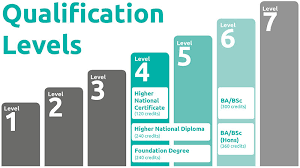
How best to describe learning and development when compared with education?

What is the difference between learning support and learner support?

What Is Assessment Excellence?

Why does it take so long to complete a Regulated Qualification Framework Programme of Learning?
You may have recently taken on an accredited qualification through HRD Services or another provider in the UK. Our framework for regulated qualifications, the RQF requires Centres such as hrdservices to ensure the overall qualification time requirement is fulfilled. Separate to this, we must consider the guided learning hours. Combined, the overall duration of regulated qualifications will be longer than say that of a non accredited professional development course. Take the Education and Training Award as an example, this qualification will be delivered over 120 hours. The Certificate in Education and Training requires Centres to ensure a total qualification time (TQT) of 360 hours. Assessor and Verifier courses in Northern Ireland work the same way. We will ensure the Awarding Body is satisfied the TQT and GLH are met in the qualifications we deliver on their behalf.
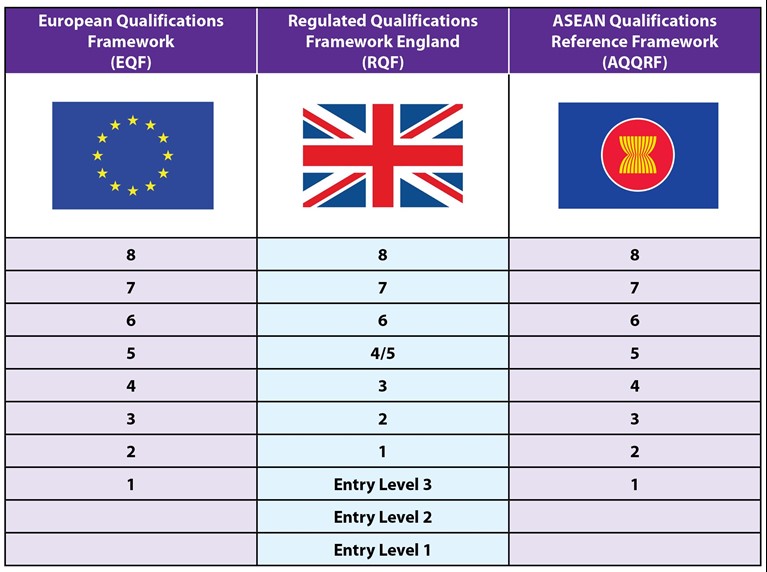
What does an internal verifier do?
You might be interested in a career in quality assurance, by undertaking an internal verification qualification. To better understand the role of an Internal Verifier otherwise known as, in the world of education and training, an Internal Quality Assurer, we will outline the main duties and responsibilities. The role of an IV or IQA is to oversee the quality of the assessment process. This typically involves key responsibilities for checking assessment materials and assessment decisions. However, the Internal Verifier will often observe their colleagues training and teaching practice to ensure consistency. Internal Quality Assurers will also evaluate Assessor expertise to ensure they remain occupationally competent in their area. The internal verifier qualifications offered by HRD Services cover all responsibilities associated with the role, and more. We have two units to cover; one underpinning knowledge, and one practice module where you will be observed conducting the internal verification process and attending a standardisation meeting. You will learn about the extended role and responsibilities, such as liaise with others involved in the IQA process e.g. trainers, witnesses and external quality assurers, deal with appeals and complaints, monitoring and observing the full learner journey from commencement to completion. To enquire to be an IQA/Internal Verifier, reach out to us using the Connect With Us Form. We will advise you on the entry requirements and how you will need access to a minimum of two Assessors.
What is a train the trainer development award versus a qualification for training?
You might be interested in a career in training, most likely within a specialist area. You may have questions like where do I start? Well, there are two different options available. Option one is a development award in training trainers a.k.a train the trainer, mostly sought after by people seeking to deliver in one subject only, for example; coaching or mentoring. ILM and some other other Awarding Organisations endorse such awards that allow people to ‘present’ information in their chosen area as opposed to teaching. Option two is a qualification regulated and accredited for any subject, as long as you hold higher qualifications in the area you would like to teach. An example of an entry level training qualification would be the award in education and training at level 3. To move into part time teaching or full time training, you would be better to go for the level 4 certificate in education and training. Be mindful though, the level 4 CET route, you will need access to learners and be working within a framework of sorts, for example a level 3 or 4 Diploma or HNC programme. You will need to have access to 30 hours teaching practice and be observed for three one hour sessions from a master scheme of work. The level 3 AET does not require you to have access to learners on a programme of learning, only a small audience for the micro teaching element.
If you are unsure what pathway to take, Connect With Us and we will give you the best advice with no obligation to study with HRD Services. Be aware when searching for courses as many providers out here are looking to take your money and have little interest or care in certificating you.

good And Bad Examples of Feedback in education and training
What does feedback do for the assessment process? Well, feedback should be developmental in nature, constructive and supportive. However, often we see comments that are brief and pretty much of no use to anyone. The minimal commentary does not instill confidence. In this brief article, we look at some good and bad examples of feedback:
Bad examples – ‘Well done, you have met the criterion’, ‘criteria achieved’, ‘thank you, good job’, ‘well done’, ‘good work’, and so on…
Good examples – ‘you have prepared a good report defining what is meant by aims and objectives for a business . These were then applied in a business context. Well worded and researched throughout’, ‘A realistic set of mission statements and objectives for– John and Alice. Very relevant for the type of business within the assignment. A detailed leaflet which is well planned and structured showing a comparison of mission statements and objectives for two types of organisations. Well-presented and good use of headings throughout’.
The difference is striking. Unfortunately, all too often, we see the former and not the latter in assessment records. This aspect of education and training and assessment is covered in both the level 3 education and training award and the level 4 certificate in education and training. We also cover the topic of feedback more extensively within the CAVA Assessor Qualification from our offices in Antrim, and training venues in Belfast, Northern Ireland.
You can check any of our qualifications here on the website, or reach out to us through the Connect With Us form.

What does the teaching role involve?
You may wonder what a teacher does day to day. Well, I certainly could not fit it all into this small space, that’s for sure. But, HRD Services can give you through our regularly updated blog, the stuff that matters and what you really need to know about teaching, training, assessing and quality assurance in education today. Today’s topic is a little more on the teaching role from the previous blog on the difference between teaching and training (scroll down the page to view).
The teaching role involves a variety of skills depending on the setting. Being able to successfully manage learners, and to make sure they are can achieve their full potential through specific learning techniques and well designed activities, is just a small part of the teacher’s role and responsibilities.
In many teaching situations, the role of the teacher is that of facilitator of learning: leading discussions, asking open-ended questions, guiding process and task, and enabling active participation of learners and engagement with ideas. However, the size of the class can greatly affect the needs of both the whole class and the individual student. Teachers, therefore, need to be able to adopt a range of roles and skills to suit specific situations through differentiation, often in the same teaching session.
The teacher must also facilitate the creation of an appropriate learning environment where students are naturally lead to achieve.
An important aspect in maintaining a high teaching standard, is the teacher’s compliance with the legislation and code of practice. This includes awareness in health and safety, and equal opportunity issues, which ensures that the classroom is a safe and enjoyable place, where academic achievement can progress and diversity is positively addressed.
Want to know more? We will teach you all about this and more in the level 4 education and training certificate, and the level 5 teaching qualifications provided though OCNNI. Reach out to us using the Connect With Us form. We love to discuss all things education and training.

What does the role of Internal Verifier IQA involve?
We are often asked what an Internal Verifier does. Otherwise known as an IQA – Internal Quality Assurer Courses, IV for short. To keep this question simple, first off, an IQA is not an Assessor. Their role is not to assess, but instead, to quality assure or ‘verify’ the assessment decisions as accurate or inaccurate. An Internal Verifier will also check assessment materials to make sure they are fit for purpose. Once an Assessor makes judgements and decisions against standards or criteria, it is up to the IV to check those decisions and judgements have been made correctly. To be clear, the Internal Verifier does not need to start checking the work like what an Assessor would do. Moreover, the Internal Verifier reads through the Assessor’s feedback and commentary first, then considers whether the feedback is indeed reflective of the learner evidence. Therefore, the importance of feedback in the assessment process cannot be overstated. Without Assessor feedback, the IQA finds themselves taking on the role of the Assessor. Clear communication is therefore essential in the assessment process. Guidance on assessment can be obtained from the awarding body specification documents. To avoid conflict and ambiguity in the assessment and quality assurance processes, a standardised approach is applied by the assessment and quality assurance teams. This typically involves regular meetings to agree minimum standards and discuss issues with learner evidence.
HRD Services provide the full internal verification suite of qualifications from our TAQA Centre in Antrim. Internal Verifier Course delivery is online and face-to-face, depending on client requirements. We deliver our IQA courses to training organisations, schools and colleges. We will teach you everything you need to know about the internal quality assurance function and how the role links with working with other professionals such as Moderators, Standards Verifiers and External Examiners.
What sets Vocational Teaching Qualifications apart from those delivered in University?
Many people are confused by the vocational education and training qualifications for teaching, and those delivered at university level. The vocational suite of education and training qualifications comprising the level 3 education and training award, level 4 certificate in education and training and the level 5 diploma in education and training are often frowned upon by Higher Education (HE) providers as they are typically delivered over a shorter time to allow people to enter adult and Further Education (FE) teaching environments. The main difference is in the actual environments these qualifications lead to. For example, the level 3 award in education and training is essentially a train the trainer type qualification to allow someone to train in a workplace or as a freelance trainer. The level 4 certificate in education and training can lead to part-time lecturing as this would be the minimum requirement to get onto the regional College registers. The level 5 diploma in education and training can be converted into a full teaching qualification to allow people to teach in schools and colleges through the Education and Training Foundation (ETF). However, regional Departments for Education usually require a PGCE in education to teach within secondary schools, colleges and universities. These PGCE qualifications will come with specialisms to allow teachers to practice.
HRD Services only offer quality teaching and learning experiences. We do not offer any fast track options as we also value the quality of teaching and learning our successful candidates will deliver in future. If you study with us and obtain an OCNNI initial teacher qualification, you will receive the best experience to allow you to not only walk the walk but talk the talk in professional teaching environments. Unlike many other providers, we have years of experience delivering at university level, college-level and internationally within Colleges and Private Training Organisations. Our small number of associates are all qualified, either as teachers, trainers, assessors, internal and external verifiers. Use the Connect With Us form to ask what qualification is best to meet your needs and the needs of potential employers.

What Does It Take to be an Assessor?
To start with, you will need access to learners or students. In regulated framework qualifications, we refer to course participants in levels 1-3 programmes as learners, and students for level 4-7 courses. Typically, someone managing a team of assessors may only require the level 3 award in understanding the principles and practices of assessment. However, if assessing in the workplace, you will require the level 3 assessing occupational competence award. And, if you are assessing in both the work environment and training environments, you will require what is known and referred to as CAVA, the certificate in assessing vocational achievement. A separate qualification exists for those only assessing in training settings. This is the level 3 award in assessing vocational skills, knowledge and understanding. Whatever you require, HRD Services Antrim will give you the best possible advice irrespective of whether you choose to study with us or go with another provider. It is always best to seek advice from experts before undertaking a course you may not need. Our team is made of up University staff level Teachers, Trainers, Tutors Assessors, Internal Verifiers. Martin Mc Afee, the Centre Manager is also a Moderator and Standards Verifier, External Examiner and International Trainer. Use the Connect With Us form to reach out for answers to those questions you might have about the qualification that best suits you needs.

The cons of short intense Regulated courses
Some people ask if we can do our education and training courses, and assessor/internal verifier awards over a couple of days or in an intense setting over a week. Of course, this is always an option; however, HRD Services and the awarding organisation we work with (NOCN and OCNNI) do not favour this approach. GLH - Guided Learning Hours requirements must still be met. Short intense courses offer no time for reflection and we often find coursework plagiarised (copied) or bought in advance because some people, unfortunately, have no real interest in learning, and just want a piece of paper to show they are so called 'qualified' teachers, trainers, assessors and internal quality assurers. Reputable awarding bodies and their centres, for example, HRD Services Antrim, will not accept plagiarism or poor quality coursework. Therefore, whilst other course providers may be less expensive and offer shorter intense programmes in education and training, there is always the risk you will never see your certificate. Why, you might ask? Well, it is quite simple. Awarding bodies look at the quality of coursework generated and determine whether it meets their standards or not. Over the last 14 years, we have determined from working with many awarding organisations in the UK, that more comprehensive and detailed coursework that is thoughtful and carefully structured always goes through internal and external verification processes smoothly. Haphazard and fast tracked coursework tends to be blocked by awarding organisations. A block on certification means that it can only be lifted by learners producing additional, or new coursework, or better coursework coming through in subsequent cohorts. This is the main reason why people wait months, and sometimes never see their certificates at all. The reason; the awarding organisation does not value short intense course delivery. HRD Services provides only quality learning experiences, and you are highly likely to receive a certificate from us for your efforts. Our View - The price is what you pay. The quality is what you receive.

The difference between TQT And GLH in Education and Training, Assessor and Verifier Courses
Total Qualification Time (TQT) - According to OCNNI, TQT has been agreed by considering the total number of learning hours required for the average learner to achieve a qualification. TQT is split into two areas: Guided Learning Hours (GLH) are learning activities under the immediate guidance or supervision of a lecturer, supervisor, tutor or other appropriate provider of education or training includes the activity of being assessed if the assessment takes place under the immediate guidance or supervision of a lecturer, supervisor, tutor or other appropriate provider of education or training. Other Learning Hours (OLH) are an estimate of the number of hours a learner will spend, as directed by (but not under the immediate guidance or supervision of) a lecturer, supervisor, tutor or other appropriate provider of education or training, including: preparatory work self-study or any other form of education or training, including assessment. Examples of GLH activities include: Classroom-based learning supervised by a teacher, Work-based learning supervised by a teacher, Live webinar or telephone tutorial with a teach in real time, E-learning supervised by a teacher in real time, All forms of assessment which take place under the immediate guidance or supervision of an appropriate provider of training, Exam time

The difference between Accredited and Non accredited programmes
This is a question training providers are often asked about. In the world of learning and development and education and training, accreditation usually correlates with formal assessment in qualifications that sit on a national framework. Endorsed and recognised learning programmes are typically training courses that have been approved by a UK awarding organisation. However, there may be no formal assessment and certainly no qualification at the end that comes with credit points from a regulated national framework such as the RQF or NQF. The older QCF - qualifications and credit framework is no longer the main seating area for UK accredited qualifications. HRD services provide accredited qualifications through the Open College Network. The level 3, 4 and 5 education and training, assessor and internal verifier qualifications sit on the RQF and come with recognition that maps into other frameworks around the world. As a learner (level 1-3 courses) or as a student (level 4-7 courses), we will educate you in UK frameworks and their structures. Use the Connect With Us link to reach out for more information.

It’s not about teaching, it’s about learning
Sometimes as educators, we feel the emphasis must be on what 'we' do, and not the learner. This is the biggest mistake teachers and trainers make. Instead of focusing on what's new and trending in terms of teaching techniques (pedagogy), we should revert our focus to the importance of knowing our audiences and what engages them the most. An andrological approach works best for adult learners. It is well know people enjoy high levels of interaction in the learning environment. HRD Services, Antrim, has all the tips and pointers you need to develop interactive learning activities for your students. The level 4 certificate in education and training is a brilliant qualification for anyone delivering teaching and learning online or face to face. Connect with us for more information on what we can do for you to enhance your L&D practice.

Engaging your learners
The BIG QUESTION we always get in training, is how do we engage our learners?
Well, it is simple really! Make learning personal, use real life experience examples, pair more experienced learners up with newbies, include stories, anecdotal evidence, case studies, structured questions/discussions. Don't forget to praise and respond with feedback to confirm and acknowledge learner contributions. You should also allow your learners plenty time to get their points across. Never speak over your learners or add yes, yes, yes, as they speak! Engagement is all about making the individual feel valued. While some opinions may vary, as a trainer, you should build on the views and opinions of your learners to create the interaction necessary for embracing diversity in your face-to-face and online sessions.
We have some excellent suggestions waiting for you to engage your learners. Having delivered train the trainer qualifications for over 14 years to different sectors, HRD services will help you plan the best engagement techniques for your specialist area.

Looking to get Into Teaching? We Have Advice for that. Where Do We Start?
HRD services recommends the level 3 education and training award as the first step in getting into training and facilitation. The level 3 AET is suitable for tutors delivering online teaching sessions. The level 4 certificate in education and training is the next step up in the world of learning and development. The level 4 CET is sought after by part-time lecturers and associate teachers. The level 5 diploma in education and training is the top rung in the teaching function within the TAQA suite of qualifications. Otherwise known as level 5 DET, the advanced teaching qualification is suitable for FE teachers and lecturers. We deliver all of our education and training teaching qualifications in the classroom in our two major cities, Belfast and Londonderry. We also provide classroom sessions from our training rooms in the Antrim Enterprise Centre. Of course, remote delivery is popular these days and HRD services facilitate the level 3 award in education and training, the level 4 certificate and the level 5 diploma through state-of-the-art technology such as Microsoft teams for education and Zoom. Our fully tutor supported model results in higher success rates for educators like you. Visit our LinkedIn, Google and Facebook online profiles for our high ratings in quality provision of learning and development qualifications accredited through the Open College Network (OCN) Northern Ireland.
What Is The Difference Between Teaching And Training?
The main difference between teaching and training is the duration we spend with our learners. Teaching tends to be over a longer period focusing on larger qualification suites, for example; level 3 national qualifications, A-levels, level 2 entry qualifications, GCSEs. Teaching also requires practitioners to not only focus on teaching content, but also wider skills development and learner support.
Training on the other hand tends to be workshop, shorter duration programmes focusing on specific aspects of work. For example, a train the trainer course may be delivered over three days focusing on developing presentation skills. Assessment is another main difference between teaching and training. In the world of education, assessment is frequent and ongoing, including coursework assignments, exams and simulations. This is what we would call assessment of learning following periods of teaching and learning. Training assessment tends to be informal and for the purposes of developing skills, knowledge and competencies for the workplace. Any assessment in training tends to be for the purposes of 'assessment of learning'.
We can teach you much more about the assessment function. Reach out to us through the connect with us page and we can give you the best possible advice on suitable qualifications. The level 3 education and training award includes an element of assessment in the understanding assessment unit. There are, of course, separate assessing qualifications offered by HRD services, including the full certificate in assessing vocational achievement, otherwise known as CAVA. We offer the assessing occupational competence, and assessing vocational skills, knowledge and understanding awards again from our training rooms in Belfast, Antrim, Derry and on-site at your premises in Northern Ireland and in other major cities in the UK. .

Introducing The Teaching And Learning Cycle
Stage 01.
assessing -Identifying needs
The identification of need stage involves initial assessment and diagnostic of learner needs, prior knowledge and experience, and levels of literacy, numeracy and ICT. This stage is critical to the teaching and learning, and assessment processes. No two learners are the same, and many will come to education and training classes with learning needs, behavioural challenges, special educational needs and disabilities..
Stage 02.
Planning to meet needs.
When we have a good understanding of our learner needs and the challenges they face, we can begin to plan our sessions to meet the needs of individual learners and larger groups. At this point, we consider learning preferences and styles, for example, Flemings VARK model. HRD services will teach you all you need to know about the dynamics of the classroom and online environments within the level 3 education and training award, and level 4 certificate in education and training..
Stage 03.
delivering content -Teaching.
The delivery stage involves using a variety of teaching and learning techniques to engage and motivate our learners and students. Tutor led presentation, paired activities and group work, including role-play and simulations, scenario based learning are some of the best ways to engage adult learners. The challenge is always around differentiation in the classroom where no two learners will be the same stop having taught in FE colleges, private training organisations and on-board ships, HRD services trainers have a wealth of experience to give you the skills, knowledge and competencies to be the best educator in your field..
Stage 04.
Assessing skills, knowledge and understanding.
Assessment can be informal or formal, otherwise known as formative and summative types. Assessment methods are different from types in that they are the ways we evaluate and determine our learners skills, knowledge and understanding. Development programmes tend to come with informal formative assessment activities, otherwise referred to as 'assessment for learning'. Regulated qualifications are formally assessed using summative methods, for example, exams, coursework and observations. The level 3 education and training award comprises three units, one focused on understanding assessment. We also offer the level 3 suite of assessor qualifications known as CAVA for those involved in NVQ and apprenticeship assessment activities..
Stage 05.
quality assuring -evaluating learning.
The evaluation of learning programmes and quality assurance processes ensure learners continue to receive the best possible experience in a teaching and learning environment. No single assessor has the right to make their judgements and decisions on their own. This is where the role of the Internal Verifier comes in. The role of the IQA, otherwise known as an IV, is not to assess. Instead, internal quality assurance verifiers check assessor feedback and learner work against the standards. HRD services will teach you everything you need to know about the internal and external quality assurance processes..